
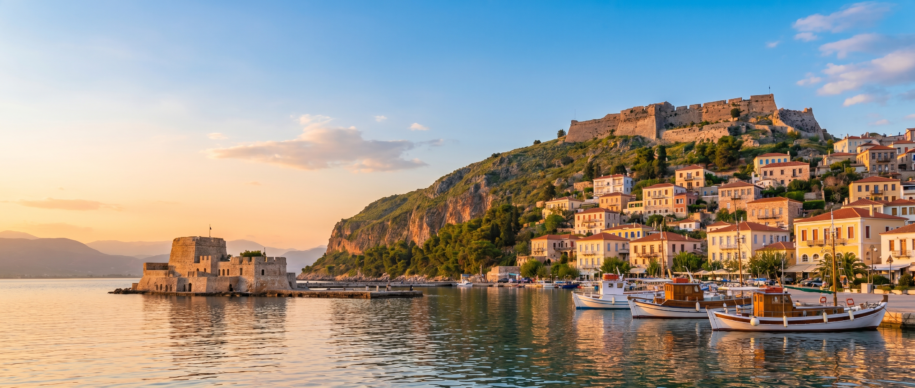
Το Ναύπλιο είναι το είδος της πόλης που μένει μαζί σας πολύ καιρό μετά την αναχώρησή σας. Πλακόστρωτα σοκάκια που ελίσσονται μέσα από νεοκλασικά αρχοντικά, δύο τεράστια βενετσιάνικα φρούρια σκαρφαλωμένα πάνω από τον Αργολικό Κόλπο και η αδιαμφισβήτητη σιλουέτα του Μπούρτζι που υψώνεται από το λιμάνι — όλα πλαισιωμένα από τον αέρα με άρωμα εσπεριδοειδών και τη θαλασσινή αύρα. Ήταν η πρώτη πρωτεύουσα της Ελλάδας (1834–1838) και αυτό φαίνεται με τον πιο μεγαλοπρεπή δυνατό τρόπο.
Από το Aroma Accommodations στο Κιβέρι, απέχει 15 λεπτά με το αυτοκίνητο ανατολικά κατά μήκος της ακτής. Αρκετά κοντά για μια ημερήσια εκδρομή, αλλά αρκετά πλούσια για να δικαιολογήσει ένα ολόκληρο Σαββατοκύριακο με εμάς ως βάση σας. Εδώ είναι όλα όσα χρειάζεστε για να προγραμματίσετε την επίσκεψή σας.
Γιατί Ναύπλιο;
Οι περισσότεροι επισκέπτες της Πελοποννήσου για πρώτη φορά παραλείπουν το Ναύπλιο για την Αθήνα ή τους αρχαίους γείτονες του Ναυπλίου - τις Μυκήνες και την Επίδαυρο. Αυτό είναι λάθος. Το Ναύπλιο είναι η πιο ρομαντική μικρή πόλη της Ελλάδας: εύκολη στους περιπάτους, γραφική, γεμάτη ιστορία τριών χιλιετιών. Είναι κατάλληλη για ζευγάρια (ηλιοβασίλεμα στον παραλιακό δρόμο), οικογένειες (εύκολη πεζοπορία με τεράστια θέα) και μοναχικούς ταξιδιώτες (κουλτούρα καφέ και μπουτίκ).
Πώς να φτάσετε στο Ναύπλιο
Οι περισσότεροι επισκέπτες μένουν στα διαμερίσματά μας στο Κιβέρι και οδηγούν — είναι μια ευθεία διαδρομή στον δρόμο Άργους-Ναυπλίου. Πάρκινγκ στην περιοχή του λιμανιού (δωρεάν χώροι στάθμευσης σε ένα μεγάλο τμήμα του λιμανιού). Αν έρχεστε από την Αθήνα, τα λεωφορεία περνούν κάθε 1-2 ώρες από τον σταθμό του Κηφισού (2 ώρες, ~€15). Για μια γραφική άφιξη, παρκάρετε στην κορυφή του Παλαμηδίου και περπατήστε στην Αρβανιτιά.
Η καλύτερη περίοδος για επίσκεψη
Η άνοιξη (Απρίλιος-Ιούνιος) και το φθινόπωρο (Σεπτέμβριος-Οκτώβριος) είναι ιδανικές: 22–28°C, λιγότερος κόσμος και η βουκαμβίλια ανθισμένη. Ο Ιούλιος και ο Αύγουστος είναι ζεστοί, αλλά το θαλασσινό αεράκι τους κάνει υποφερτούς - προγραμματίστε την περιήγησή σας για νωρίς το πρωί ή αργά το απόγευμα. Ο χειμώνας έχει τη δική του γοητεία: ομίχλη πάνω από τον κόλπο, άδεια φρούρια και οι καλύτερες τιμές για διαμονή.
Τι να δείτε στο Ναύπλιο
Φρούριο Παλαμήδι
Το κορυφαίο ορόσημο του Ναυπλίου. Οι Βενετοί το έχτισαν μεταξύ 1711-1714 σε έναν λόφο 216 μέτρων και εξακολουθεί να δεσπόζει στον ορίζοντα. Οκτώ προμαχώνες (συμπεριλαμβανομένου του Αγίου Ανδρέα, όπου κάποτε φυλακίστηκε ο Θεόδωρος Κολοκοτρώνης) συνδέονται με αμυντικά τείχη. Η ανάβαση: 857 σκαλιά, όχι τα 999 που θα ακούσετε από ορισμένους ξεναγούς — αρκετά για να σας κάνουν να κερδίσετε αυτή τη θέα. Εναλλακτικά, οδηγήστε: η οδική πρόσβαση σας φέρνει στην κορυφή σε 5 λεπτά. Η είσοδος κοστίζει 20€ (10€ μειωμένο). Υπολογίστε 1,5-2 ώρες. Πηγαίνετε νωρίς το πρωί για το καλύτερο φως και τον λιγότερο κόσμο.
Φρούριο Μπούρτζι
Το μικρό κάστρο στο δικό του νησάκι είναι το πιο φωτογραφημένο σημείο στο Ναύπλιο — το σύμβολο της πόλης. Έχει χρησιμεύσει ως φρούριο, κατοικία Οθωμανών αξιωματούχων, ακόμη και ως ξενοδοχείο τον 20ό αιώνα. Η πρόσβαση γίνεται με μικρό σκάφος από το κεντρικό λιμάνι (7€ μετ' επιστροφής, 5€ μειωμένο). Το ίδιο το ταξίδι μετ' επιστροφής αξίζει τον κόπο: το Ναύπλιο από το νερό μοιάζει με καρτ ποστάλ. Οι επισκέψεις διαρκούν συνήθως 30-45 λεπτά στο νησάκι.
Συμβουλή: Το καλύτερο σημείο για φωτογραφίες στο Μπούρτζι είναι από την παραλιακή λεωφόρο της Αρβανιτιάς κοιτώντας δυτικά, ειδικά 30 λεπτά πριν τη δύση του ηλίου.
Ακροναυπλία (Το Παλιό Φρούριο)
Παλαιότερη από το Παλαμήδι, η ακρόπολη της Ακροναυπλίας χρονολογείται από την αρχαιότητα και οχυρώθηκε από κάθε μεγάλη δύναμη από τότε — Βυζαντινούς, Φράγκους, Ενετούς, Οθωμανούς. Μπορείτε να φτάσετε εκεί μέσω του Πάρκου Σταϊκοπούλου ή από την πλευρά της πλατείας Αρβανιτιάς. Η βόλτα είναι εύκολη και η θέα στην Παλιά Πόλη και τον κόλπο είναι υπέροχη. Δεν υπάρχει χρέωση εισόδου. Ιδανική για μια περιπλάνηση αργά το απόγευμα πριν το δείπνο.
Αρχαιολογικό Μουσείο Ναυπλίου:
Στεγασμένο σε ένα υπέροχο βενετσιάνικο πέτρινο κτίριο του 1713 στην πλατεία Συντάγματος, αυτό το μουσείο φιλοξενεί αντικείμενα από τη νεολιθική περίοδο έως τους μυκηναϊκούς και κλασικούς χρόνους. Δύο από τα σημαντικότερα αξιοθέατα είναι οι παλαιολιθικές εστίες από το σπήλαιο Φράγχθι (32.000–21.000 π.Χ. — μερικά από τα παλαιότερα στοιχεία ανθρώπινης εγκατάστασης στην Ελλάδα) και η Πανοπλία Δενδρών, ένα πλήρες σετ μυκηναϊκής χάλκινης πανοπλίας του 15ου αιώνα π.Χ. που ζύγιζε 23 κιλά και ήταν πλήρως φορετή. Η είσοδος κοστίζει 10€ (5€ μειωμένο). Υπολογίστε 1 ώρα. Αξίζει να το συνδυάσετε με έναν καφέ στο Σύνταγμα αμέσως μετά.
Πλατεία Συντάγματος και Παλιά Πόλη
Η πλατεία Συντάγματος είναι η καρδιά του Ναυπλίου — μεγαλοπρεπή δημόσια κτίρια, κομψά καφέ και το Αρχαιολογικό Μουσείο στο νότιο άκρο της. Αλλά η μαγεία κρύβεται στις λεπτομέρειες: περπατήστε ένα τετράγωνο μακριά από την πλατεία και θα βρείτε την πλατεία Τριών Ναυάρχων (που πήρε το όνομά της από τους Άγγλους, Γάλλους και Ρώσους ναυάρχους της Ναυμαχίας του Ναυαρίνου) με το οπλοστάσιο και τα κανόνια της, και την πλατεία Φιλελλήνων κρυμμένη πίσω από τη δημοτική αγορά, πιο ήσυχη και πιο ξέφρενη, με μια μικρή αγορά φρούτων και λαχανικών τα πρωινά.
Συμβουλή φωτογραφίας: Ο σταθμός Βασιλέως Κωνσταντίνου, ακριβώς έξω από το Σύνταγμα, έχει την κλασική νεοκλασική φωτογραφία μπαλκονιού. Νωρίς το πρωί (7–9 π.μ.) για άδειους δρόμους και χρυσό φως.
Το Βαυαρικό Λιοντάρι
Ένα λιγότερο γνωστό μνημείο με μια μελαγχολική ιστορία. Κρυμμένο κοντά στον σιδηροδρομικό σταθμό του Ναυπλίου, αυτό το πέτρινο λιοντάρι, σκαλισμένο από τον Γερμανό γλύπτη Κρίστιαν Σίγκελ, τιμά Βαυαρούς στρατιώτες που πέθαναν από τύφο κατά τη διάρκεια της υπηρεσίας τους στον βασιλιά Όθωνα τη δεκαετία του 1830. Είναι μικρό, λίγο κρυμμένο και παράξενα συγκινητικό — ένα ήσυχο αντίστιγμα στα μεγάλα φρούρια. Δεν υπάρχει χρέωση εισόδου, μόνο μια παράκαμψη 5 λεπτών.
Πέρα από το Ναύπλιο: Λοιπές ημερήσιες εκδρομές
Ένας λόγος για να παρατείνετε τη διαμονή σας είναι η πυκνή αρχαιολογία παγκόσμιας κλάσης σε απόσταση 30 λεπτών με το αυτοκίνητο. Δείτε τι αξίζει τον χρόνο σας:
Μυκήνες (25 λεπτά από το Ναύπλιο, 30 λεπτά από το Άρωμα)
Το κέντρο του μυκηναϊκού πολιτισμού — σκεφτείτε τον Αγαμέμνονα, τον Τρωικό Πόλεμο, την Πύλη των Λεόντων. Τα Κυκλώπεια Τείχη (τεράστια πέτρινα τεμάχια που πήραν το όνομά τους από τους μυθικούς γίγαντες που υποτίθεται ότι τα έχτισαν) φαίνονται τρεκλίζοντας από κοντά. Ο Θησαυρός του Ατρέα, ένας τάφος σε σχήμα κυψέλης περίπου 400 μέτρα από την ακρόπολη, είναι άψογα διατηρημένος. Το μουσείο του χώρου εκθέτει τα αυθεντικά αντικείμενα, όπως χρυσές νεκρικές μάσκες και κεραμικά. Είσοδος: 20€ (10€ μειωμένο). Υπολογίστε 2-3 ώρες. Φέρτε μαζί σας νερό και αντηλιακή προστασία — δεν υπάρχει σχεδόν καθόλου σκιά μέσα στην ακρόπολη.
Τίρυνθα (10 λεπτά από το Ναύπλιο)
Μικρότερη και λιγότερο διάσημη από τις Μυκήνες, αλλά τα Κυκλώπεια τείχη της είναι ακόμη ψηλότερα — σε ορισμένα σημεία φτάνουν σε πάχος έως και 7 μέτρα. Ο Όμηρος την αποκαλούσε «Τίρυνθα περιτειχισμένη». Αν έχετε περιορισμένο χρόνο, η επίσκεψή σας διαρκεί 45 λεπτά και θα σας εντυπωσιάσει. Είσοδος: 10€ (5€ μειωμένο). Συνδυάζεται με τις Μυκήνες για την πλήρη ξενάγηση στην Εποχή του Χαλκού.
Αρχαία Ασίνη (20 λεπτά από το Ναύπλιο)
Αναφέρεται από τον Όμηρο στον «Κατάλογο των Πλοίων» της Ιλιάδας. Τα ερείπια καλύπτουν την μυκηναϊκή, κλασική, ελληνιστική και ρωμαϊκή περίοδο, όλα σε έναν μικρό λόφο πάνω από το σύγχρονο χωριό Τολό. Ήσυχο, μακριά από το τουριστικό μονοπάτι και με μια ωραία παραλία στους πρόποδές του. Είσοδος: 5€ (3€ μειωμένο). Συνδυάστε την με μια βουτιά στην παραλία του Τολού — όλη η εκδρομή διαρκεί μισή μέρα.
Βυζαντινό Μουσείο Αργολίδας (BYMA) – Άργος (20 λεπτά από το Ναύπλιο)
Βυζαντινό Μουσείο Αργολίδας (BYMA) – Άργος (20 λεπτά από το Ναύπλιο)
Πάρκινγκ & Πρακτικές συμβουλές για το Ναύπλιο
- Parking: Οι δρόμοι της Παλιάς Πόλης είναι στενοί ή μόνο για πεζούς. Χρησιμοποιήστε το μεγάλο δημοτικό πάρκινγκ στην είσοδο της Παλιάς Πόλης (ακολουθήστε τις πινακίδες προς «Πάρκινγκ Παλαμήδι» ή «Πάρκινγκ Σύνταγμα»). ~€3–5 ανά ημέρα κατά την υψηλή περίοδο.
- Τα καλύτερα σημεία για φωτογραφίες: Η παραλιακή λεωφόρος Αρβανιτιάς κατά το ηλιοβασίλεμα (Μπούρτζι με οπίσθιο φωτισμό), η κορυφή του Παλαμηδίου για την πανοραμική θέα και τα σοκάκια έξω από το Σύνταγμα για τις φωτογραφίες από το μπαλκόνι.
- Πού να φάτε: Απομακρυνθείτε από το Σύνταγμα — οι παράδρομοι πίσω από την αγορά έχουν καλύτερες τιμές και περισσότερη τοπική πελατεία.
- Πότε να ανεβείτε στο Παλαμήδι: 7:30–9:00 π.μ. ή 5:00–7:00 μ.μ. το καλοκαίρι. Ο ήλιος στην πέτρα το μεσημέρι είναι καυτός.
Έχοντας το Aroma accommodations ως βάση σας
Το Ναύπλιο διαθέτει καταλύματα, αλλά είναι ακριβά κατά τη διάρκεια της σεζόν και τα περισσότερα ξενοδοχεία δεν έχουν χώρο στάθμευσης ή πρόσβαση στη θάλασσα. Τα στούντιο και τα διαμερίσματά μας στο Κιβέρι σας προσφέρουν τα καλύτερα και των δύο κόσμων: 15 λεπτά από το Ναύπλιο, 10 λεπτά από την Τίρυνθα, 5 λεπτά από την παραλία Κιβέρι, και τιμές απευθείας κράτησης που ξεπερνούν οποιαδήποτε ηλεκτρονική πλατφόρμα. Δωρεάν ιδιωτικός χώρος στάθμευσης συμπεριλαμβάνεται.
Οι επισκέπτες του Aroma απολαμβάνουν επίσης:
- Εύκολη πρόσβαση στις Μυκήνες, την Επίδαυρο και τις ακτές της Αργολίδας
- Δύο παραλίες σε κοντινή απόσταση με τα πόδια
- Μικρές κουζίνες για αυτοεξυπηρέτηση (εξοικονομήστε χρήματα στα γεύματα)
- Συνεργασία με την Unlimited Adrenaline για θαλάσσιο καγιάκ και πεζοπορικές εκδρομές
FAQ
Είναι αρκετή μια μέρα για να δεις το Ναύπλιο;
Μπορείτε να καλύψετε τα σημαντικότερα αξιοθέατα σε μια ολόκληρη μέρα αν ξεκινήσετε νωρίς: φρούριο Παλαμήδι (πρωί), Παλιά Πόλη + Αρχαιολογικό Μουσείο (μεσημέρι), βόλτα με βάρκα στο Μπούρτζι (αργά το απόγευμα). Αλλά δύο ημέρες είναι καλύτερες — σας επιτρέπουν να προσθέσετε μια ημερήσια εκδρομή στις Μυκήνες ή την Επίδαυρο.
Πόσο απέχει το Ναύπλιο από το Aroma Accommodations;
15 χλμ. / 15 λεπτά με το αυτοκίνητο. Ακολουθήστε τον δρόμο Άργους ανατολικά και στη συνέχεια τις πινακίδες για το Ναύπλιο — η διαδρομή είναι απλή και καλά σηματοδοτημένη.
Πόσο κοστίζει η είσοδος στο Φρούριο του Παλαμηδίου;
Γενική είσοδος 20€, μειωμένο 10€ (φοιτητές, ηλικιωμένοι άνω των 65 ετών, νέοι της ΕΕ κάτω των 25 ετών). Παιδιά κάτω των 18 ετών από χώρες της ΕΕ εισέρχονται δωρεάν. Το ίδιο εισιτήριο καλύπτει την Ακροναυπλία εάν επισκεφθείτε την ίδια ημέρα.
Μπορώ να επισκεφτώ τις Μυκήνες και το Ναύπλιο την ίδια μέρα;
Απολύτως. Ξεκινήστε από τις Μυκήνες στις 9:00 π.μ. (όταν ανοίγουν), αφιερώστε 2–2,5 ώρες και στη συνέχεια οδηγήστε 25 λεπτά μέχρι το Ναύπλιο για μεσημεριανό γεύμα και ένα απόγευμα εξερεύνησης της πόλης. Αν έχετε ενέργεια, προσθέστε το φρούριο του Παλαμηδίου μέχρι τη δύση του ηλίου.
Υπάρχουν παραλίες στο Ναύπλιο;
Η παραλία της πόλης (Αρβανιτιά) είναι ένας βοτσαλωτός κολπίσκος με καθαρά νερά, δημοφιλής για γρήγορες βουτιές, αλλά μικρή και γεμάτη κατά την υψηλή περίοδο. Για κανονικές αμμώδεις παραλίες, αναζητήστε την Καραθώνα ή κατευθυνθείτε στο Τολό (10 λεπτά νότια) ή στο χωριό μας Κιβέρι ακριβώς έξω από τα διαμερίσματά μας — μπορείτε να φτάσετε στο νερό με τα πόδια σε λιγότερο από 5 λεπτά.
Είναι το Ναύπλιο προσβάσιμο με τα πόδια;
Πολύ. Η Παλιά Πόλη είναι συμπαγής και ως επί το πλείστον πεζοδρομημένη. Μπορείτε να περπατήσετε από την πλατεία Συντάγματος μέχρι τη βάση του Παλαμηδίου (25 λεπτά), το λιμάνι Μπούρτζι (15 λεπτά) ή την παραλία Αρβανιτιά (10 λεπτά). Η ανάβαση στο Παλαμήδι είναι το μόνο επίπονο κομμάτι — χρησιμοποιήστε την οδική πρόσβαση αν τα σκαλιά είναι πάρα πολλά.
 EL
EL  EN
EN
Αφήστε μια απάντηση